
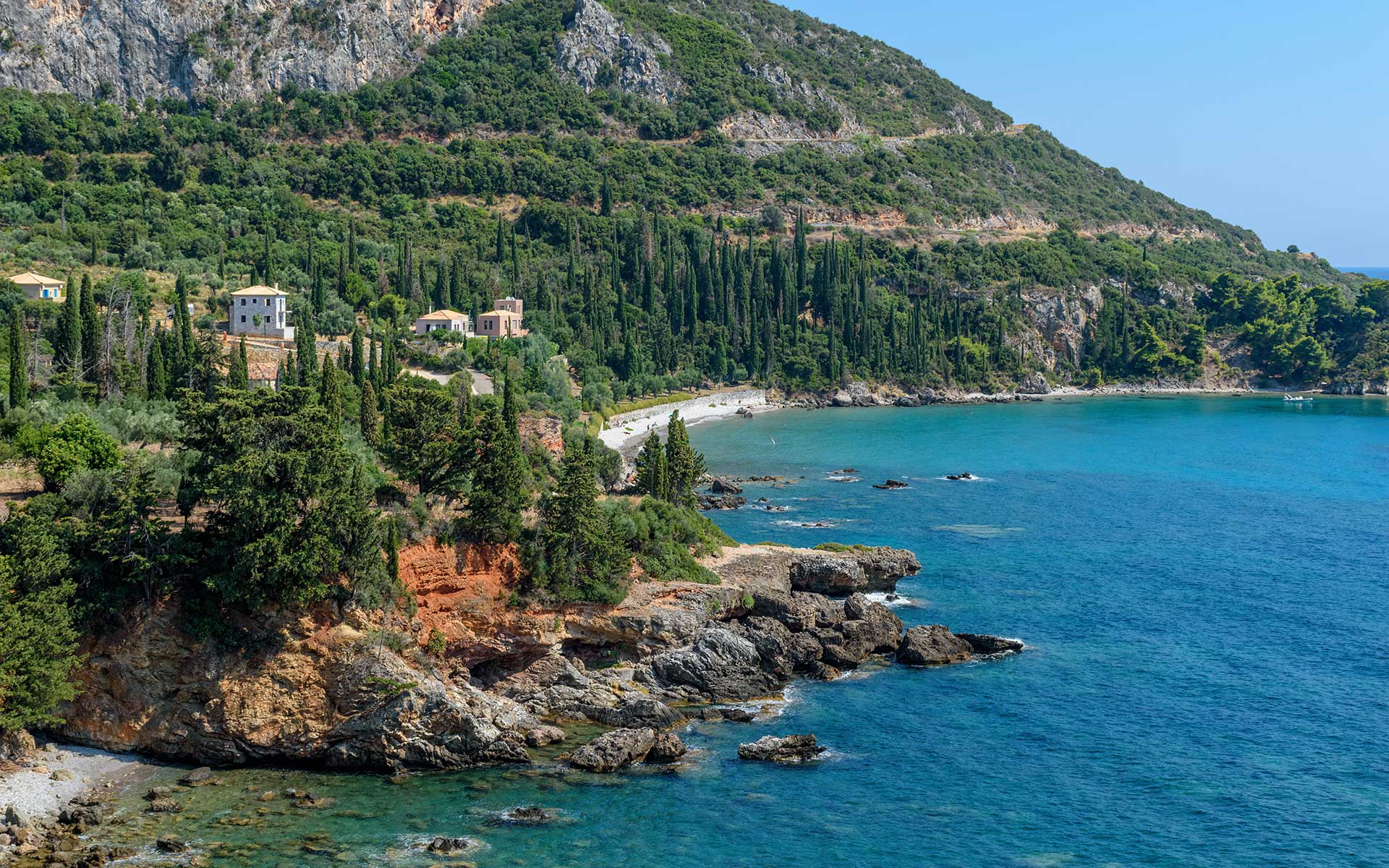
In Mani, water has never been something to take for granted.
The landscape makes that visible. Dry summers, rocky terrain and vegetation adapted to demanding conditions have shaped how people build, cultivate and live here. In this setting, responsible water use is not simply a sustainability feature added to a home. It is part of designing appropriately for place.
For a contemporary residence, that begins by asking a straightforward question: how can we use the water we need without using more than we need?
Efficiency begins with everyday use
Much of a home’s water consumption comes from ordinary routines: showers, taps, toilets, cleaning and irrigation.
Efficient fixtures and thoughtful systems can reduce unnecessary consumption without asking residents to fundamentally change how they live. The point is not restriction. It is eliminating waste that provides no additional comfort or value.
That distinction matters. Sustainable living works best when responsible choices are built into the home rather than constantly demanded from the person living in it.
A landscape should belong to its climate
Outside the home, planting decisions matter just as much.
A garden designed around plants suited to local Mediterranean conditions can require less intervention than one attempting to impose a completely different landscape on Mani.
Native and climate-appropriate planting can reduce irrigation requirements while creating something equally important: a landscape that feels as though it belongs.
At ERAWA, this relationship between architecture and landscape is fundamental. The residences are not conceived as isolated objects surrounded by decorative planting, but as part of the wider character of Oitylo.
Use water more than once
There is also an opportunity to think differently about what happens after water has been used.
Water recycling and reuse strategies can allow appropriate water to serve another purpose rather than immediately becoming waste. Depending on the system, recovered water can contribute to uses such as irrigation, reducing demand on fresh water supplies.
It is a simple principle with a larger implication: resources do not always need to follow a one-use-and-discard model.
Sustainability that becomes ordinary
The most successful environmental measures are often the least theatrical.
They work quietly in the background. A more efficient fitting. Planting that naturally requires less water. A system that recovers a resource instead of wasting it. Hundreds of small decisions that accumulate over years of living in a home.
This is particularly important in a place like Mani, where the landscape itself reminds us that resources are finite.
Responsible design begins by understanding what a place can give and what we should ask from it.
At ERAWA, water-conscious design is therefore not treated as an isolated environmental gesture. It forms part of a broader approach to creating homes that respond intelligently to their setting.
Because living well in Mani should not mean demanding more from the landscape. It should mean learning how to live well with it.
Designed for Mani. Considered down to the last drop.
Discover the ERAWA residences and the principles shaping a more thoughtful way of living.