
Interpretation, not imitation
There is an important difference between architecture that looks local and architecture that actually responds to its location. Mani makes that distinction particularly clear. Its built character developed through necessity: available stone, demanding terrain, strong sun, wind, defence and ways of life that evolved over generations.
Stone walls, compact volumes, protected openings and close relationships with the landscape were not decorative gestures. They had reasons. Their visual character emerged from practical responses to place. Contemporary architecture does not need to reproduce historic buildings to belong in Mani. What matters is understanding the intelligence behind them.
Belonging to a place does not require copying its past. It requires understanding the intelligence behind it.
From local logic to contemporary comfort
For ERAWA, this means working with scale, proportion, natural materials and the relationship between building and terrain while accommodating contemporary expectations of comfort, light and openness. The objective is not nostalgia. It is continuity without imitation.
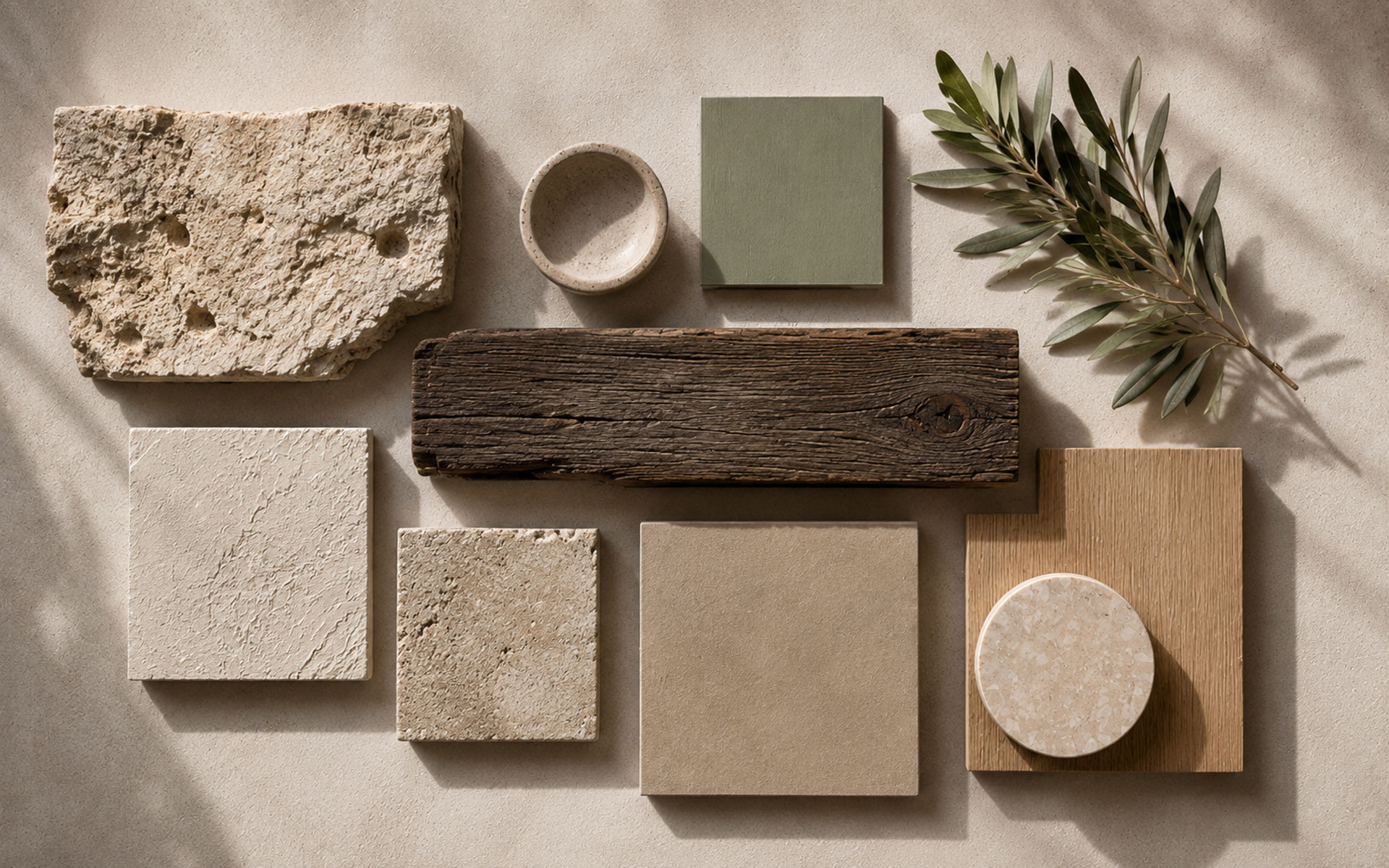
Local material references connect the residences to their setting without turning materiality into decoration. Native planting and terraced gardens extend that relationship into the landscape. Bioclimatic principles support natural comfort, while solar water heating reduces energy demand in everyday use.
The same thinking applies to how the residences sit on the land. A building can either dominate its site or become part of its composition. In a place as visually strong as Mani, restraint is not a lack of ambition. It is a design decision that allows architecture and landscape to hold their value together.
Belonging is a design decision
The objective is not to make new architecture appear old. It is to make it feel appropriate. That distinction allows ERAWA to remain contemporary without becoming detached from its context. Modern living can be generous and comfortable while still respecting the scale, material character and environmental logic of the place.
This approach also protects against one of the risks of destination architecture: designing primarily for the first photograph. A home has to perform after the novelty has passed. Materials must age convincingly. Outdoor spaces must work with the climate. Circulation, shade and privacy have to support real routines rather than only a visual concept.
There is a practical benefit to this restraint as well. Architecture grounded in climate, durable materials and clear spatial logic is less dependent on novelty to remain appealing. It can age, weather and adapt without losing the idea that made it coherent in the first place. Over time, that coherence matters more than a fashionable gesture because it supports both everyday use and a lasting architectural identity.
Good contextual design does not ask a new home to disappear, nor does it make the landscape serve as a decorative backdrop. It creates a relationship in which each strengthens the other. That is what it means to build with Mani rather than simply building in it.
Discover the Design of ERAWA →