
Beyond the first impression
Property is often discussed through the language of appreciation, yield and resale. But there is another measure of value that receives less attention: whether you still want to own the home years after the decision to buy it.
Homes designed primarily around current trends can date quickly. Materials age. Lifestyles change. What once felt distinctive becomes familiar. Longevity therefore begins with decisions that are less dependent on fashion: proportion, natural materials, useful outdoor space, privacy, light and a strong relationship with location.
A home worth keeping needs to work beyond the moment of purchase. It should still feel relevant after the first photographs, after tastes shift and after the routines of its owners have changed.
Scarcity has more than one meaning
Scarcity is not simply a limited number of properties. It can also mean a landscape that cannot easily accommodate unlimited development, a setting with an established identity, or a combination of location and architecture that would be difficult to reproduce elsewhere.
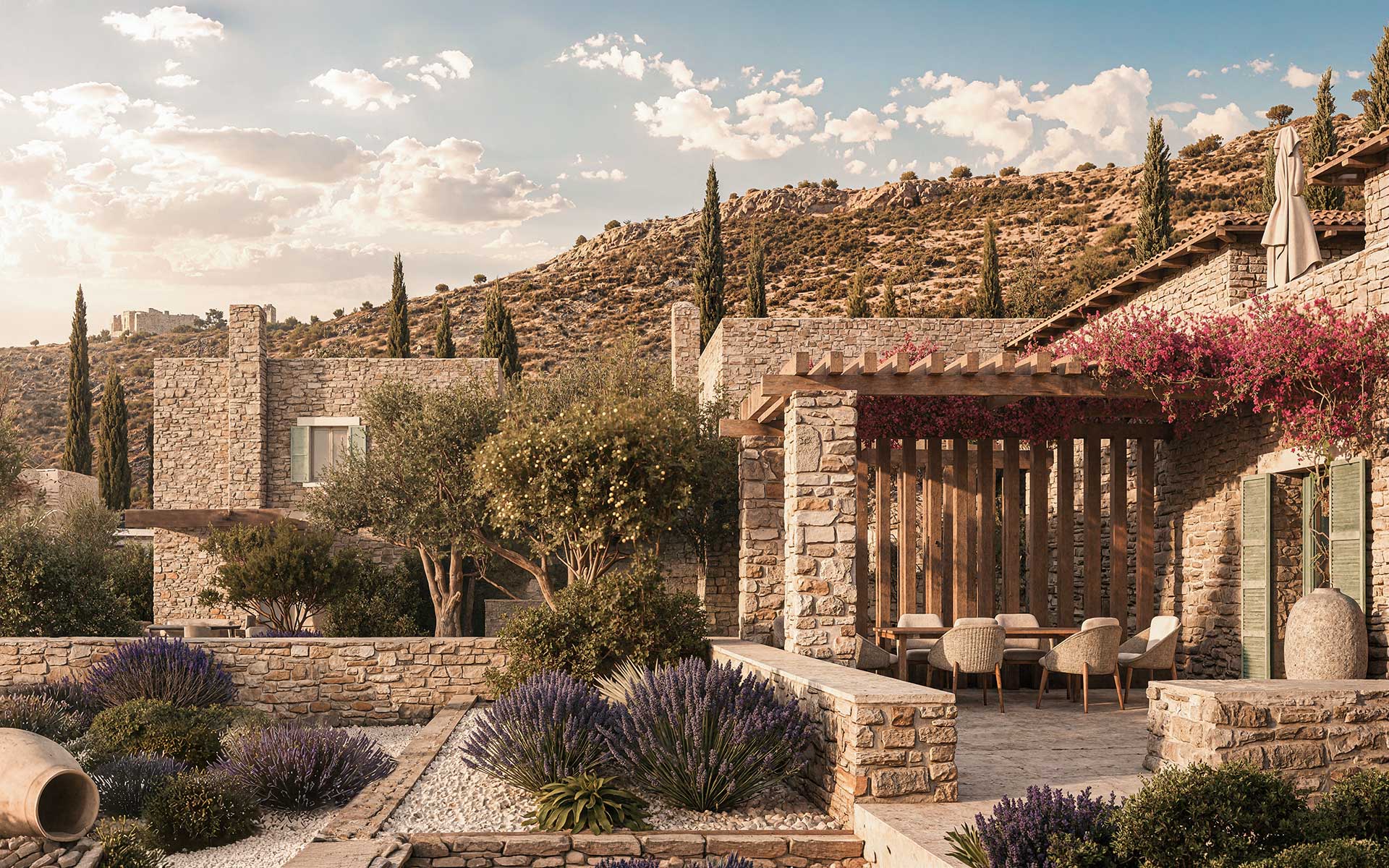
ERAWA comprises only 11 private residences in Oitylo. Their long-term proposition therefore begins with something fundamental: the homes belong to a finite collection within a place whose character already exists independently of the development.
Protected heritage, the distinctive geography of Mani and the limited nature of the collection all contribute to that sense of rarity. For eligible non-EU buyers, Golden Visa eligibility may add a practical dimension to ownership, while optional rental management can support owners who do not occupy the residence year-round. These are benefits, but they are not substitutes for the quality of the underlying asset.
Perhaps the most valuable home is not the one you eventually sell, but the one you never need to.
Designed beyond the first owner
That changes how a residence should be designed. Not simply for its first owner or first photograph, but for years of occupation, changing lives and eventually another generation. Enduring value begins with fundamentals that do not need to be reinvented every few years.
Long-term value is also emotional. A home can become associated with seasons, routines, family and return. Those qualities cannot be reduced to a financial calculation, but they are often the reason a property stops feeling interchangeable with other options on the market.
There is also a useful distinction between price and value. Price reflects a market at a particular moment. Value is tested over time through desirability, usefulness, scarcity and the quality of the experience a property continues to offer. The more durable those qualities are, the less the home depends on short-lived signals of luxury.
The strongest form of ownership may therefore be continuity: a home that remains desirable because the fundamentals were right from the beginning. A place to live in, return to, keep and, perhaps eventually, pass on with long-term confidence.